On January 30, 2026, Environment Canada recorded a wind chill of minus 30 at Toronto Pearson, with parts of southern Ontario feeling close to minus 40. CAA’s advice that morning was simple: check your battery before you drive. The average one lasts only three to five years.
Mornings like that are when phones start ringing at towing companies across Waterloo Region. Some callers need a quick boost. Others have a flat. A few have a car that just won’t run.
So what can roadside assistance actually fix on the spot, and when do you need a tow? Here’s a straight answer for each problem.
Key Takeaways
- Most dead batteries can be boosted at the roadside in under 15 minutes.
- Flat tires can usually be fixed by installing your spare or repairing a small puncture.
- Serious engine trouble usually can’t be repaired at the roadside, but a tow gets you to a shop safely.
- Describing the problem clearly when you call helps the right truck show up.
- Electric and all-wheel-drive vehicles often need a flatbed tow.
Dead Battery: Usually Fixed on the Spot
A dead battery is the easiest roadside problem to solve. In most cases, a technician connects a booster pack or jumper cables, starts your car and checks that it’s running properly.
Dead battery roadside assistance usually involves:
- Checking the battery terminals for corrosion or loose connections
- Boosting the battery safely
- Making sure the engine stays running after the boost
- Advising whether the battery or alternator may be the real problem
A boost gets you going, but it doesn’t fix a battery that’s failing. If your car needed a boost two mornings in a row, the battery likely needs replacing. If it dies while you’re driving, the alternator is the more likely culprit.
After a boost, drive for at least 20 to 30 minutes so the alternator can recharge the battery. A quick trip to the corner store won’t do it.
Signs it’s more than a dead battery: The engine cranks normally but won’t start, you hear rapid clicking even after a boost, or warning lights stay on while driving.
What About Electric Vehicles?
EVs still have a small 12-volt battery that runs the locks, screen and computers. If it dies, the car won’t “turn on,” even with a full main battery. That 12-volt battery can usually be boosted. If the main battery is drained, the car needs to be towed on a flatbed to a charger.
Flat Tire: Usually Fixed on the Spot
Flat tire assistance Waterloo drivers call for usually ends in one of three ways.
Spare installation. The technician removes the damaged tire and puts on your spare. This takes 15 to 30 minutes in most cases.
Puncture repair. A small nail or screw hole in the tread can often be repaired where you are, so you don’t need the spare at all.
Tow to a shop. If you have no spare, the spare is flat, the sidewall is damaged or more than one tire is gone, the car is towed to a tire shop.
Make sure you know where your wheel lock key is. If your car has locking lug nuts and the key is missing, the wheel can’t come off without special tools.
Many newer cars come with a sealant kit instead of a spare. These work for small punctures but not for blowouts or sidewall damage.
Engine Trouble: Sometimes, But Often Needs a Tow
Engine problems are where roadside assistance has limits. A technician can check simple causes, but most real engine repairs need a garage with a lift, parts and diagnostic tools.
Problems that can sometimes be sorted at the roadside:
- A loose or corroded battery cable
- Running out of fuel
- A car that’s flooded or won’t start in extreme cold
- A blown fuse that controls something important
Problems that usually need a tow:
- Overheating, steam or coolant leaks
- Grinding, knocking or loud metal noises
- A flashing check engine light with rough running
- Transmission failure, where the car won’t move into gear
- A snapped serpentine belt
- Smoke from under the hood
If you see steam or smoke, turn off the engine and get everyone out of the car and away from traffic. Don’t open the hood until it cools.
Trying to drive a car with serious engine trouble “just a little further” is how a repair turns into a replacement. A tow costs far less than a new engine.
Other Problems Roadside Help Can Handle
Depending on the provider, emergency roadside assistance can also include:
- Pulling a car out of a ditch or snowbank
- Moving a vehicle that’s blocking traffic
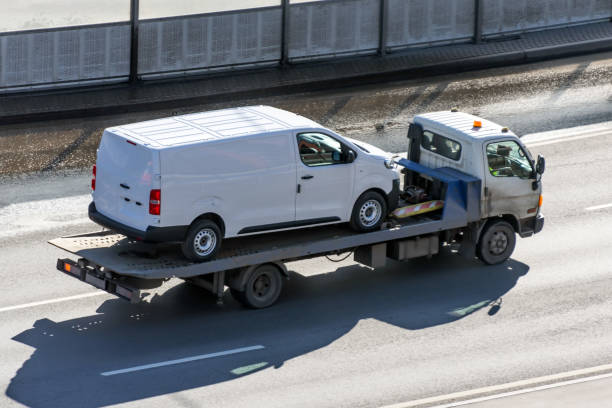
- Flatbed towing for AWD, lowered or damaged cars
- Help with heavy vehicles, such as trucks and vans
Ask what’s included when you call. Lockouts and fuel delivery aren’t offered by every towing company.
How to Get the Right Help Faster
The more clearly you describe the problem, the faster you’ll get the right truck.
- “It won’t start, and the lights are dim.” That points to a battery boost.
- “The front right tire is shredded, and I don’t have a spare.” That needs a flatbed.
- “The temperature gauge is in the red, and steam is coming out.” That needs a tow.
Also give your exact location, your vehicle’s make, model and colour, and whether it’s all-wheel drive or electric.
When to Call for Help Instead of Fixing It Yourself
You can boost a battery or change a tire yourself if you’re somewhere safe and know how. Call a pro when you’re on a highway shoulder or busy road, it’s dark or icy, your lug nuts won’t budge, you don’t have booster cables, or you’re unsure what’s wrong.
Roadside assistance Waterloo drivers count on should be available around the clock, give you a clear price before starting and send a driver who knows the area.
FAQs
Can roadside assistance replace a car battery?
Some providers carry batteries, but many only boost. If your battery won’t hold a charge, you may need a tow to a shop or a trip to an auto parts store.
Can a tow truck fix engine problems?
Usually not. A technician can check simple causes like loose cables or an empty tank. Most engine problems need a mechanic.
How long does a jump start take?
Usually 10 to 15 minutes once the technician arrives.
Is it safe to drive on a spare tire?
Yes, for a short distance. Most compact spares are designed for under 80 km/h and should be replaced quickly.
Final Thoughts: Know What to Expect
A dead battery or flat tire is usually a quick fix. Engine trouble often isn’t, but a fast, safe tow keeps a bad day from getting worse.
Whatever the problem, call WR Towing at (519) 861-1211, 24/7 across Waterloo, Kitchener and Cambridge. See our flat tire repair and 24/7 roadside assistance services or contact us online.