If you’ve never needed a tow in Waterloo Region, it’s easy to assume all towing is the same. A truck shows up, your car gets moved, and you’re done.
But the towing method matters more than most drivers realize.
A flatbed tow and a wheel-lift tow can both be “normal.” They can both be done safely. The difference is what happens to your vehicle while it’s being moved—especially if you drive an AWD SUV, a performance sedan, a low-clearance car, or anything with a drivetrain that doesn’t like two wheels rolling on the road.
This blog will explain what each tow method actually does, when each is safest, and what to say on the roadside so your vehicle doesn’t suffer avoidable damage.
First, What These Two Tow Types Really Mean
Flatbed Towing
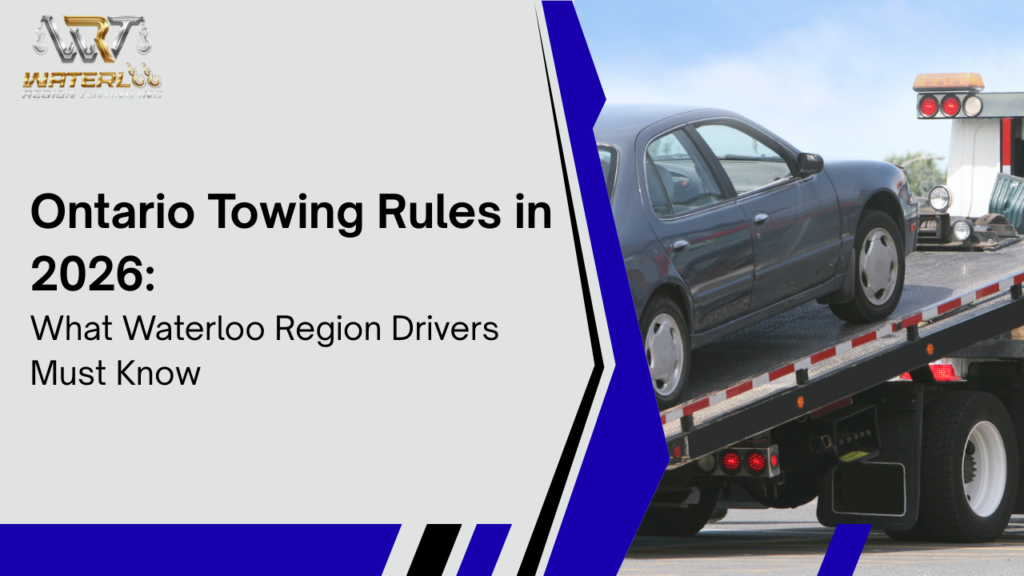
A flatbed tow loads your vehicle completely onto a truck bed. All four wheels are off the ground. Your car is basically being carried.
This is one reason flatbeds are widely considered best for severely damaged vehicles and AWD/4WD vehicles, because nothing is rotating on the road during the tow. AAA notes that flatbeds are best for towing severely damaged vehicles and vehicles with all-wheel or four-wheel drive.
Wheel-Lift Towing
A wheel-lift truck lifts either the front or rear wheels off the ground using a metal yoke. The other two wheels stay on the road and roll during the tow.
Wheel-lift towing can be very practical for:
- Short local tows
- Tight spaces (parking lots, narrow streets)
- Simple breakdowns where the vehicle can roll normally
AAA also explains that wheel-lift towing is a common method and is often used depending on the situation and vehicle type.
The key issue is not the truck. It’s your drivetrain and how your car is built.
The Big Rule In Plain Language: If The Vehicle Should Not Roll, Use A Flatbed
If your vehicle is not to have any wheels rolling while being towed, a flatbed is the safest option.
That usually includes:
- AWD / 4WD vehicles
- Many EVs
- Vehicles with drivetrain or transmission issues
- Severely damaged vehicles
- Low-clearance or lowered vehicles
- Luxury or performance vehicles, where you want zero risk
AAA’s guidance highlights flatbeds as best for AWD/4WD and severely damaged vehicles.
And if you are an Ontario driver, the best approach is simple: don’t try to “guess” what’s safe. Ask for the method that protects the vehicle.
When Flatbed Is The Safest Choice In Waterloo Region
1) AWD And 4WD Vehicles (Common In Winter Here)
Waterloo Region winters push many people into SUVs and AWD crossovers. Those systems are great in snow, but towing can be tricky.
Why? Many AWD systems can be damaged if two wheels are rolling on the road while the other two are lifted. That can create drivetrain stress because parts of the system are rotating in ways they weren’t designed for.
AAA explicitly says flatbeds are best for vehicles with AWD or 4WD.
What to say on the roadside:
- “It’s AWD. I need a flatbed or proper dollies so all four wheels are off the ground.”
2) EVs And Hybrids
EVs are becoming more common in Waterloo and Kitchener every year. They are quiet, heavy, and full of electronics. Some models have a “tow mode,” and some have specific towing restrictions.
The safe default is still: flatbed unless the manufacturer clearly allows another method.
A good operator will ask:
- Is it an EV?
- Is it in tow mode?
- Is it safe to roll?
If they don’t ask, you should.
What to say:
- “It’s an EV. I want a flatbed tow.”
3) Lowered Cars, Sport Packages, And Luxury Vehicles
Uptown Waterloo speed bumps. Kitchener potholes in spring. Tight condo parking lots. These are all places where low clearance becomes a problem.
Wheel-lift towing can scrape:
- Front lip
- Side skirts
- Underbody panels
A flatbed with a proper loading angle and boards can reduce that risk.
What to say:
- “It’s low clearance. Please send a flatbed.”
4) After A Collision
If you were hit and the wheels aren’t straight, the suspension is bent, or airbags are deployed, you don’t want the vehicle dragged or rolled incorrectly.
AAA notes flatbeds are best for severely damaged vehicles.
When Wheel-Lift Can Be Totally Fine (If It’s Done Correctly)
Wheel-lift is not “bad.” It’s a tool. In many Waterloo Region calls, it’s the fastest and cleanest solution.
Wheel-lift can be appropriate when:
- It’s a simple breakdown, and the vehicle can roll normally
- The tow distance is short (local shop, short move)
- The vehicle is front-wheel drive or rear-wheel drive, and the correct end is lifted
- The operator uses dollies when needed, so the rolling wheels aren’t stressing the drivetrain
CAA also notes that flatbeds or dollies will be used when required for towing, which reflects the real-world point: the method should match the vehicle.
Practical example:
- A front-wheel-drive sedan with a dead battery in a Kitchener plaza can often be wheel-lifted safely for a short tow—assuming the correct end is lifted, and the car rolls smoothly.
Waterloo Region Factors That Change The Best Choice
Tight Spaces And Parking Garages
Downtown Kitchener and many condo buildings have:
- Narrow lanes
- Low ceilings
- Sharp turns
- Underground parking
Wheel-lift trucks can sometimes access spots a flatbed can’t. In those cases, a good operator may do a careful short pull-out and then load to a flatbed outside.
That’s not shady. That’s practical.
Winter Conditions
In snow and ice, loading a vehicle onto a flatbed can take a bit longer because the operator is doing it safely.
If you’re stuck in a snowbank in Cambridge or on a side street in Waterloo, the tow might involve:
- A controlled winch
- Proper attachment points
- Slow loading
The right move is to prioritize safety over speed.
What To Ask Dispatch Before The Truck Arrives
These questions save time and reduce mistakes.
- “Is this a flatbed or wheel-lift?”
- “My vehicle is AWD / EV / low clearance. Can you confirm you’re sending the right truck?”
- “Do you use dollies when required?”
- “Where will the car be towed?” (exact address)
If a company can’t answer these clearly, that’s a sign to call someone else.
What To Ask The Driver Before The Tow Starts
Even if dispatch promised a flatbed, confirm it on scene.
- “Can you confirm all four wheels will be off the ground during the tow?”
- “Can you confirm the destination address?”
- “Can I see the consent form and the rate schedule before you begin?”
Ontario requires tow operators to provide the maximum rate schedule when requesting consent to tow.
IBC also summarizes that Ontario consumers can review the Consent to Tow form and maximum rate schedule before towing begins.
This is not you being difficult. This is you being careful.
Simple Decision Guide (Use This When You’re Stressed)
Choose flatbed if:
- Your vehicle is AWD/4WD
- Your vehicle is an EV or hybrid, and you’re unsure about towing limits
- The car is low clearance, luxury, performance, or modified
- The car is badly damaged
- You suspect transmission or drivetrain issues
- The wheels don’t roll normally
Wheel-lift may be fine if:
- It’s a short tow
- The vehicle is FWD or RWD
- The correct end is lifted
- Dollies are used when needed
- The vehicle rolls normally and is not heavily damaged
If you’re unsure, pick flatbed. It’s the safest default for most “unknown” situations.
The Bottom Line
Most towing problems aren’t caused by towing itself. They happen because the wrong method is used on the wrong vehicle, in a rush.
So keep it simple:
- If it’s AWD/4WD, EV, low clearance, luxury, or damaged, ask for a flatbed.
- If it’s a simple breakdown and the vehicle can roll normally, a wheel-lift can be fine when used properly.
- Always confirm the destination and paperwork before the tow begins.
For such useful information you can rely on Waterloo Towing.