A flat tire and a dead battery are two of the most common calls a towing company gets, and most of the time, neither one actually needs a tow. But sometimes they do, and knowing the difference saves you from either an unnecessary tow bill or, worse, driving on a problem that gets worse the longer it sits.
TL;DR: A flat tire or dead battery usually gets fixed on the spot with a spare swap or a boost. Light towing becomes necessary when there’s no usable spare, the tire can’t be safely patched, or the battery won’t hold a charge after a boost. Light duty towing Cambridge handles both situations for everyday vehicles, and emergency towing Cambridge is available any time it’s needed.
Here’s how to tell which situation you’re actually in.
Two Common Problems, Two Different Outcomes
A flat tire and a dead battery feel similar in the moment — the car won’t move, and you’re stuck wherever you are. But the fix depends entirely on the specifics. A flat with a good spare is a fifteen-minute job. A flat with a shredded sidewall and no spare is a tow. A dead battery that takes a boost and holds is done. A battery that won’t hold a charge points to something else entirely.
When a Flat Tire Needs More Than a Spare Swap
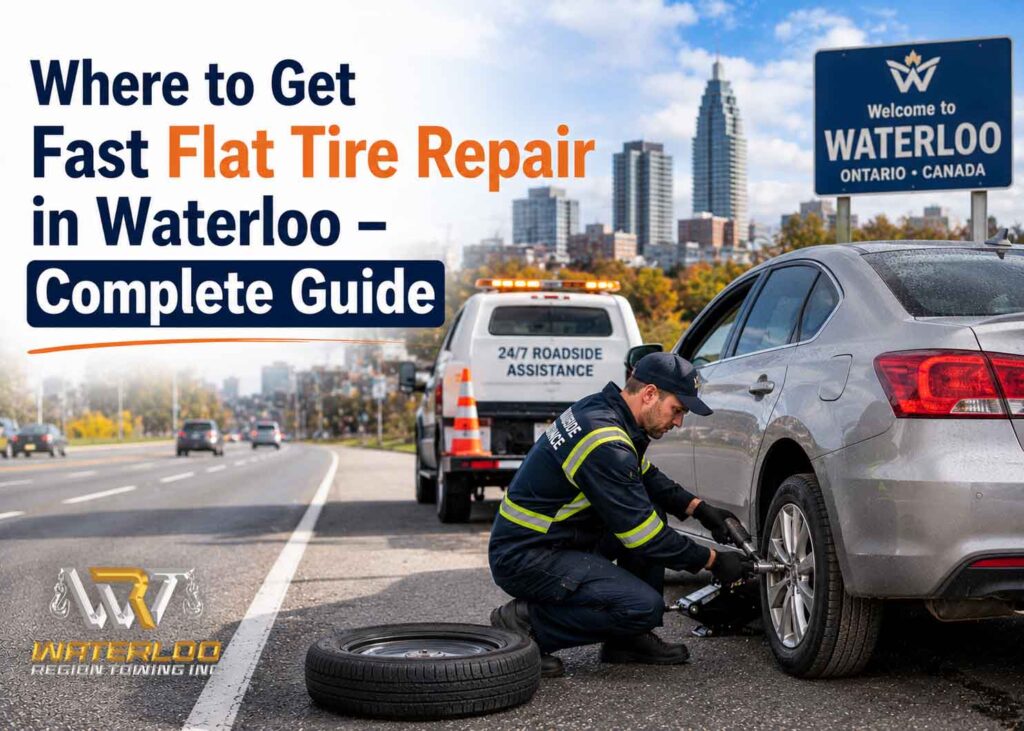
A flat tire gets resolved roadside most of the time — patch it, or swap in the spare. It tips into needing flat tire towing Cambridge when:
- There’s no spare tire in the vehicle, or the spare is also flat
- The damage is on the sidewall rather than the tread, which usually isn’t safe to patch
- The rim itself is bent or cracked from hitting a curb or pothole
- More than one tire is damaged, which a single spare can’t fix
In any of these cases, driving on the tire further risks the rim, the suspension, or worse. A tow to a shop for a proper replacement is the safer move.
When a Dead Battery Needs More Than a Boost
A boost fixes most dead batteries. It stops being enough when:
- The car starts, then dies again within a few minutes
- The engine won’t turn over at all, even with a boost applied
- The battery is old and has failed to hold a charge more than once recently
- There’s a clicking sound instead of the engine turning over, which can point to a starter issue rather than the battery
When a boost doesn’t hold, dead battery towing Cambridge gets the car to a shop where the actual cause — battery, alternator, or starter — can be diagnosed properly instead of guessed at on the roadside.
What Light Towing Actually Means
Light towing Cambridge refers to towing for standard passenger vehicles — sedans, hatchbacks, small SUVs, and similar. It’s a different setup than heavy-duty towing, which handles trucks, larger commercial vehicles, or equipment. Light duty towing Cambridge uses smaller, more maneuverable trucks, which matters in tight parking lots or narrow residential streets where a bigger rig wouldn’t fit easily.
How the Decision Gets Made on Site
A technician doesn’t guess. On arrival, they inspect the tire or test the battery and electrical system directly. For a tire, that means checking where the damage is and whether the rim is intact. For a battery, that means applying a boost and watching whether the car holds a charge or stalls again shortly after.
That on-site check is what decides whether you’re driving away in ten minutes or the car’s going on a flatbed.
Why It’s Worth Calling Instead of Guessing
Trying to diagnose either problem yourself on the shoulder wastes time and sometimes makes things worse. Repeated boost attempts on a battery that won’t hold can strain the electrical system further. Driving on a tire that looks “mostly fine” can bend a rim that was otherwise repairable. A technician’s job is to make that call quickly and correctly, which is exactly what emergency towing Cambridge is set up to do.
What It Costs
Roadside fixes — a spare swap or a boost — cost less than a tow. When light towing is needed, pricing depends on distance to the shop and the vehicle. Ask for a quote before the truck heads out, and a straightforward provider will give you one without hedging.
FAQ
How do I know if my dead battery just needs a boost or something more?
If the car starts and runs normally after a boost, that’s usually the whole fix. If it dies again shortly after or won’t turn over at all, it likely needs towing for a proper diagnosis.
Can a flat tire really need a tow if I have a spare in the trunk?
Yes, if the spare is also flat or underinflated, or if the rim is damaged and a spare alone won’t solve the underlying problem.
Is light towing different from a regular tow truck?
Light towing refers to the vehicle size being handled — cars and small SUVs — using smaller trucks better suited to tight spaces than heavy-duty rigs.
Will the technician just tow my car automatically, even for a simple fix?
No. A technician checks the tire or battery first and only recommends a tow when the roadside fix genuinely isn’t safe or won’t hold.
Does emergency towing Cambridge cost more at night?
Some providers apply a small after-hours difference, but a true 24 hour service treats a late-night call the same as a daytime one in terms of response.
Not Sure Which One You Need? Call WR Towing
Flat tire, dead battery, or something in between — WR Towing sorts it out on site and handles light towing across Cambridge, Kitchener, and Waterloo when a roadside fix isn’t enough. Contact us or call 519-861-1211 anytime.